

Homemade Hummus Recipe | Creamy & Delicious Chickpea Dip
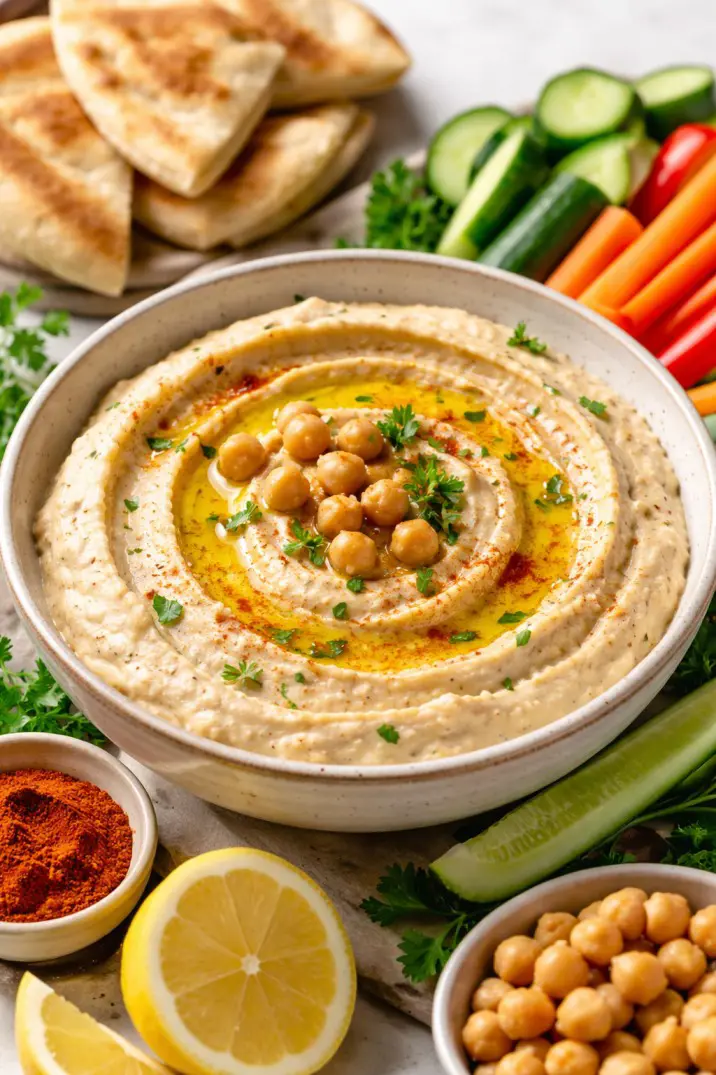
Hummus has become a staple in kitchens around the world. This creamy, protein-packed chickpea dip is not only delicious but also incredibly versatile.
While store-bought versions are convenient, making hummus at home allows you to control the flavors, texture, and freshness. Whether you want a classic hummus or a twist with herbs and spices, this homemade hummus recipe is simple and satisfying.
Ingredients You’ll Need
Before you start, gather these simple, wholesome ingredients:
-
1 can (15 oz) chickpeas – drained and rinsed, or 1½ cups cooked chickpeas
-
¼ cup fresh lemon juice – about 1 large lemon
-
¼ cup tahini – sesame paste adds creaminess
-
1 small garlic clove, minced
-
2 tablespoons extra-virgin olive oil
-
½ teaspoon salt
-
½ teaspoon ground cumin – optional, for warmth and depth
-
2 to 3 tablespoons water – to adjust consistency
-
Paprika and fresh parsley – for garnish
Step-by-Step Instructions
1. Whip the Tahini and Lemon Juice
Start by combining the tahini and fresh lemon juice in a food processor or high-speed blender. Blend for about 1 minute until the mixture becomes light and creamy. This initial step helps aerate the tahini, giving your hummus a smooth, fluffy texture that makes a big difference in the final result.
2. Add Garlic, Olive Oil, and Salt
Next, add the minced garlic, extra-virgin olive oil, and salt to the whipped tahini mixture. Blend for another 30–45 seconds until fully incorporated. This allows the garlic to infuse the tahini and lemon mixture, creating a fragrant base for your hummus.
3. Blend in the Chickpeas
Add your drained and rinsed chickpeas (or cooked chickpeas if using fresh) into the mixture. Blend for 1–2 minutes until smooth. Pause occasionally to scrape down the sides of the processor to ensure every chickpea is fully blended. This step is key for achieving a creamy, lump-free hummus.
4. Adjust the Creaminess
Hummus thickness can vary depending on your preference. Add 2–3 tablespoons of water gradually while blending until you reach the desired consistency. For a spreadable hummus, keep it thicker; for a dip, aim for a softer, creamier texture. Taste as you go to ensure the flavor remains balanced.
5. Add Seasonings and Final Flavor Adjustments
Add ground cumin for a warm, earthy flavor or experiment with smoked paprika, cayenne, or chili flakes for a twist. Taste the hummus and adjust salt, lemon juice, or garlic to suit your palate. This is the stage where you can make your hummus uniquely yours.
6. Serve and Garnish
Spoon the hummus into a serving bowl, creating a slight swirl with the back of a spoon. Drizzle generously with olive oil and sprinkle paprika, fresh parsley, or even toasted pine nuts on top for a professional presentation. Serve with warm pita bread, fresh vegetables, or use as a sandwich spread. Hummus can also be part of a larger Mediterranean platter with falafel, olives, and tabbouleh.
Variations to Try
-
Roasted Red Pepper Hummus – Blend roasted red peppers with the chickpeas for a smoky sweetness.
-
Herb Hummus – Add fresh cilantro, parsley, or basil for a refreshing twist.
-
Spicy Hummus – Mix in a pinch of cayenne pepper, smoked paprika, or a few drops of hot sauce.
-
Beet Hummus – Roasted beets give a vibrant pink color and subtle earthy flavor.
Tips for Perfect Homemade Hummus
-
Use fresh lemon juice: Bottled lemon juice can be bitter. Fresh juice brightens the flavor.
-
Adjust garlic to taste: Some prefer a mild garlic taste, while others enjoy a robust flavor.
-
Blend thoroughly: Patience with blending ensures a creamy texture.
-
Store properly: Homemade hummus keeps well in an airtight container in the fridge for up to 5 days.
Health Benefits of Hummus
Homemade hummus is not just tasty but also nutritious. Chickpeas are rich in plant-based protein and fiber, supporting digestive health and keeping you full longer. Tahini provides healthy fats and essential minerals like calcium, magnesium, and iron. Additionally, hummus is naturally gluten-free and vegan, making it suitable for most dietary preferences.
Serving Suggestions
- Classic Snack: Pair with carrot sticks, cucumber slices, or bell peppers.
- Mediterranean Plate: Serve alongside falafel, olives, and tabbouleh.
- Spread for Sandwiches: Use hummus instead of mayonnaise for a healthier alternative.
- Salad Dressing: Thin with a little water or olive oil to drizzle over fresh greens.
Pro Tip: For a party, create a hummus platter with assorted toppings like roasted chickpeas, pine nuts, or pomegranate seeds for an eye-catching presentation.
Storage and Freezing Tips
Store your hummus in an airtight container in the fridge for up to 5 days. To freeze, place it in a freezer-safe container and thaw in the fridge overnight before serving. Stir well after thawing to restore creaminess.
Conclusion
Making hummus at home is easy, rewarding, and allows you to create a dip that’s fresh, flavorful, and exactly how you like it. With endless variations and serving options, it’s a kitchen staple that enhances any meal or snack. Once you try this homemade hummus recipe, you’ll never go back to store-bought versions.
Was this article helpful?

Healthy Eating
Homemade Lemonade Recipe: Fresh, Easy & Perfectly Balanced
Healthy Eating
Homemade Ranch Seasoning Recipe
Healthy Eating
Homemade Pizza Dough Recipe: Easy, Soft & Crispy
Healthy Eating
Homemade Rice Crispy Treats: A Sweet and Crunchy Delight
Healthy Eating
How to Make Homemade Garlic Bread

Healthy Eating